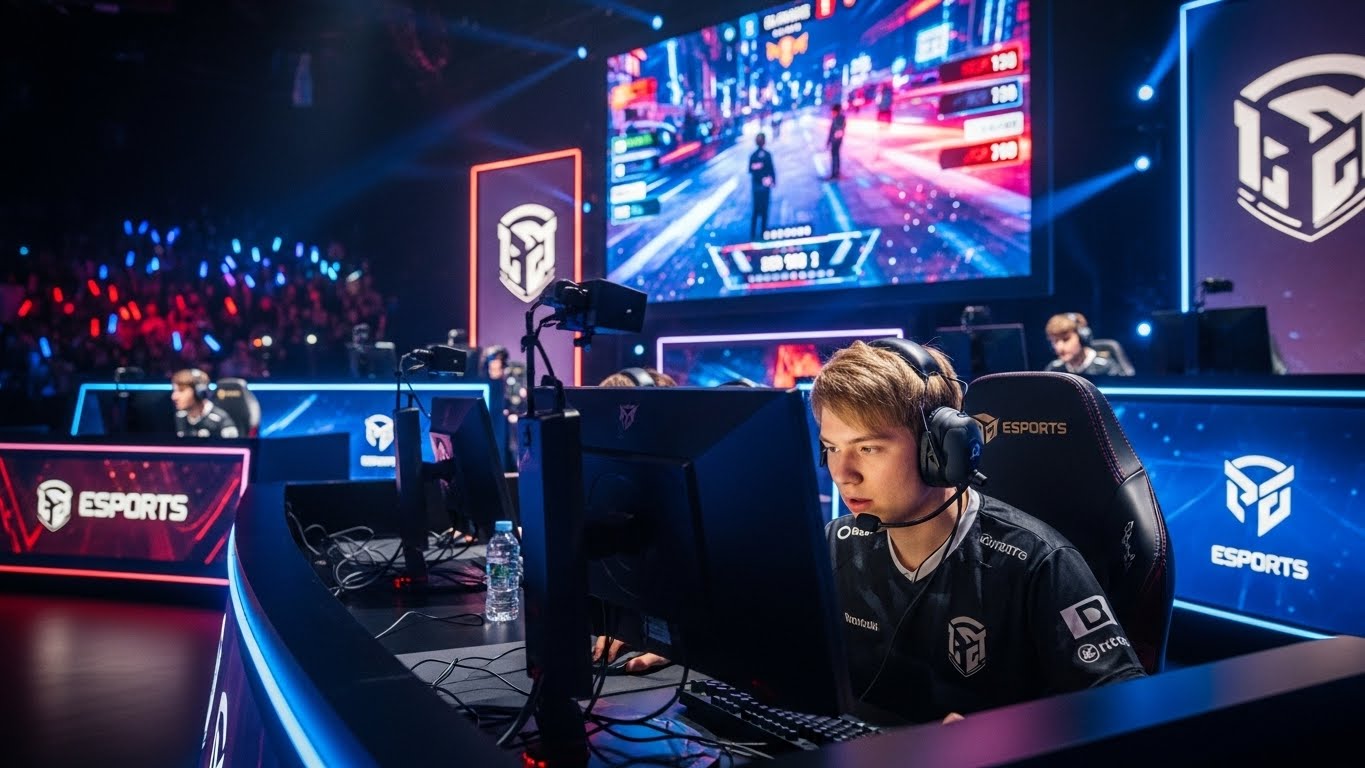
Esports, or electronic sports, has emerged as one of the most influential entertainment industries of the 21st century. What began as casual video game competitions has evolved into a highly organized global phenomenon with professional teams, massive tournaments, and millions of spectators worldwide. Esports now commands a presence similar to traditional sports, complete with sponsorships, media rights, coaching staff, and international fan bases.
This blog explores the history of esports, the rise of professional gaming, the impact on players and fans, technological advancements shaping the industry, and what the future holds for competitive gaming.
The Origins of Competitive Gaming
The roots of esports trace back to the 1970s and 1980s when players began competing for high scores in arcade games. Games like Space Invaders and Pac-Man introduced the idea that players could compete and be ranked based on skill. While these early competitions were mostly local and informal, they laid the groundwork for more structured tournaments.
In the 1990s, the rise of personal computers and local area networks enabled multiplayer games that emphasized strategy and teamwork. Titles like Doom, Quake, and StarCraft allowed players to compete in more complex and interactive environments. South Korea became a central hub for competitive gaming, particularly through televised StarCraft tournaments that attracted dedicated fans and helped esports gain mainstream recognition.
The Growth of Esports in the 2000s
The 2000s marked a major turning point for esports. With faster internet connections and the rise of online multiplayer platforms, players could compete globally, removing geographical limitations. Games like Counter-Strike, Warcraft III, and later League of Legends and Dota 2 created professional competitive ecosystems.
The introduction of streaming platforms transformed esports from a niche hobby into a spectator-driven industry. Services like Twitch allowed fans to watch matches live, follow players, and engage with commentary in real-time. This social element helped build communities around games and teams, transforming esports into a global cultural phenomenon.
Prize pools began to grow dramatically, attracting skilled players who could pursue gaming as a professional career. International tournaments became showcases for skill, teamwork, and strategy, combining the excitement of live competition with the accessibility of online platforms.
Structure of Professional Esports
Professional esports mirrors traditional sports in its structure. Players typically belong to teams or organizations that manage training, marketing, and sponsorship deals. Teams employ coaches, analysts, and managers to optimize performance and strategy.
Different games require specialized roles. In League of Legends, for instance, players assume positions such as top laner, jungler, mid laner, marksman, and support. Each role has unique responsibilities and contributes to the overall team strategy. In first-person shooter games like Counter-Strike: Global Offensive, players specialize as entry fraggers, snipers, in-game leaders, or support players.
Training is rigorous. Professional players spend six to ten hours a day practicing, analyzing gameplay, and studying opponents. Physical and mental well-being is critical, as peak performance relies on focus, reflexes, and endurance. Many teams now employ fitness coaches and psychologists to maintain player health and prolong careers.
Major Esports Titles and Their Influence
Several games have shaped the esports landscape and remain central to competitive gaming.
- League of Legends (LoL): A multiplayer online battle arena game that has become synonymous with professional esports. Its World Championship draws millions of viewers worldwide and features highly structured team competitions.
- Dota 2: Known for The International, which boasts some of the largest prize pools in esports history, Dota 2 emphasizes strategy, teamwork, and hero selection.
- Counter-Strike: Global Offensive (CS:GO): A first-person shooter that has maintained popularity for over a decade due to its skill-based gameplay and competitive scene.
- Fortnite: Beyond casual play, Fortnite’s competitive scene has grown through global tournaments, offering multi-million-dollar prize pools and innovative competitive formats.
- Overwatch: A team-based shooter combining first-person action with strategy, Overwatch has cultivated a strong professional league and international tournaments.
These games not only define competitive gameplay but also shape esports culture, fan engagement, and global tournaments.
The Spectator Experience
Esports thrives as a spectator sport. Fans actively participate by watching matches, analyzing strategies, and following teams and players. Streaming platforms provide live commentary, multiple camera angles, and interactive features that allow viewers to feel connected to the action.
Unlike traditional sports, esports offers unique interactivity. Fans can chat with commentators, vote in polls, and even influence content creation. This engagement creates a sense of community, where viewers are part of the shared experience rather than passive observers.
Fantasy esports leagues and community tournaments also enhance spectator involvement. Players can follow their favorite teams, predict match outcomes, and engage in strategy discussions, creating a dynamic relationship between competition and audience participation.
The Business Side of Esports
Esports has grown into a multi-billion-dollar industry. Revenue comes from sponsorships, advertising, media rights, merchandise, ticket sales, and in-game purchases. Major brands now invest in esports to reach younger, digitally connected audiences.
Professional teams generate income through sponsorships, merchandising, and tournament winnings. Top players earn salaries comparable to traditional athletes, with additional income from streaming, content creation, and endorsements. Event organizers invest in production, venues, and broadcasting to maximize audience reach and revenue.
The economic ecosystem of esports continues to expand, with opportunities for players, teams, developers, and content creators. Sponsorship deals and media partnerships are increasingly sophisticated, making esports a viable long-term industry with global impact.
Cultural Significance of Esports
Esports has transcended traditional gaming, becoming a significant cultural phenomenon. It promotes community engagement, global interaction, and social identity through fandom and participation. International tournaments showcase national pride, with fans supporting teams from their countries just as they would in traditional sports.
Esports also challenges conventional notions of athleticism. Success requires reflexes, strategic thinking, teamwork, and mental resilience. Players gain recognition, celebrity status, and influence over popular culture, bridging gaming with fashion, music, and entertainment.
The cultural influence extends to online communities, content creation, and educational opportunities. Platforms like Twitch, YouTube, and TikTok allow players and fans to create content, share strategies, and engage with global audiences. Esports has become a platform for social interaction, self-expression, and cultural exchange.
Training, Discipline, and Mental Health
Professional esports requires discipline and commitment. Players dedicate long hours to practice individual skills, coordinate with teams, and study opponents. Maintaining focus and adaptability is crucial, especially under competitive pressure.
Mental health is increasingly recognized as a critical factor in esports. Competitive stress, long hours, and public scrutiny can lead to burnout, anxiety, or depression. Professional teams are now investing in wellness programs, counseling, and mental coaching to support their players.
Physical health is equally important. Reflexes, reaction times, and endurance are enhanced through regular exercise, proper nutrition, and ergonomic setups. A holistic approach to well-being ensures players can perform consistently and sustain long careers.
Technology and Esports
Technology drives every aspect of esports. High-performance computers, gaming peripherals, low-latency networks, and streaming software are essential for competitive play. Precision hardware and reliable connectivity allow players to perform at peak levels.
Streaming platforms have revolutionized how fans experience esports. High-quality broadcasts, live commentary, real-time analytics, and interactive features create a dynamic viewing experience. Advanced software also enables performance tracking, strategic analysis, and training improvements.
Emerging technologies like virtual reality, augmented reality, and AI are poised to further enhance esports. VR and AR could create immersive viewing experiences, while AI can assist with strategy analysis, player training, and game design. Technology ensures esports remains innovative, accessible, and engaging.
Education and Career Opportunities
Esports offers more than just playing professionally. Career paths include coaching, broadcasting, event management, marketing, analytics, and game development. The industry has also become part of educational programs, with universities offering esports degrees and scholarships.
Students and aspiring professionals gain skills in leadership, communication, teamwork, and strategic thinking, which are transferable across industries. The growth of esports ensures long-term career opportunities beyond competitive play, making it a viable and diverse professional ecosystem.
Global Expansion of Esports
Esports is no longer limited to a few countries or regions. Asia, Europe, North America, and South America host competitive leagues and international tournaments, attracting participants and fans from around the globe. Countries like South Korea, China, and the United States have become hubs for esports development, infrastructure, and talent cultivation.
Global tournaments such as The International, League of Legends World Championship, and Fortnite World Cup bring together players from all continents, promoting cultural exchange and international recognition. Online platforms ensure that fans from remote regions can participate in tournaments, spectate matches, and engage with communities, making esports a truly global phenomenon.
Challenges Facing Esports
Despite its growth, esports faces several challenges. Regulation and governance are still developing, with varying standards across countries. Ensuring fair play, addressing cheating, and monitoring age restrictions are ongoing concerns.
Mental health and player welfare remain critical issues. Teams and organizers must prevent burnout and ensure sustainable careers. Additionally, monetization strategies, inclusivity, and diversity require continued attention to maintain credibility and long-term growth.
The industry must also balance rapid expansion with quality, ensuring that infrastructure, broadcasting, and competition standards keep pace with audience expectations.
The Future of Esports
The future of esports is promising. As technology advances, competition will become more immersive, interactive, and global. AI, VR, AR, and cloud gaming will redefine both play and spectator experiences.
Esports may gain further legitimacy alongside traditional sports, with potential inclusion in international multi-sport events. Inclusivity, gender representation, and accessibility will continue to improve, expanding participation and audience engagement.
Esports will also integrate more closely with entertainment, streaming, and social media, creating a dynamic ecosystem that merges gaming with cultural and technological trends.
Conclusion
Esports has evolved from casual competitions into a global entertainment and professional industry. It combines skill, strategy, technology, and culture in ways that traditional sports cannot replicate. Players, teams, fans, and creators all contribute to an ecosystem that continues to grow and innovate.
With technological advancements, increasing professionalism, and cultural recognition, esports is positioned to remain a defining element of entertainment for generations to come. It is a testament to the power of digital innovation, community, and competitive spirit, proving that gaming is not just a pastime but a global phenomenon shaping the future of entertainment.