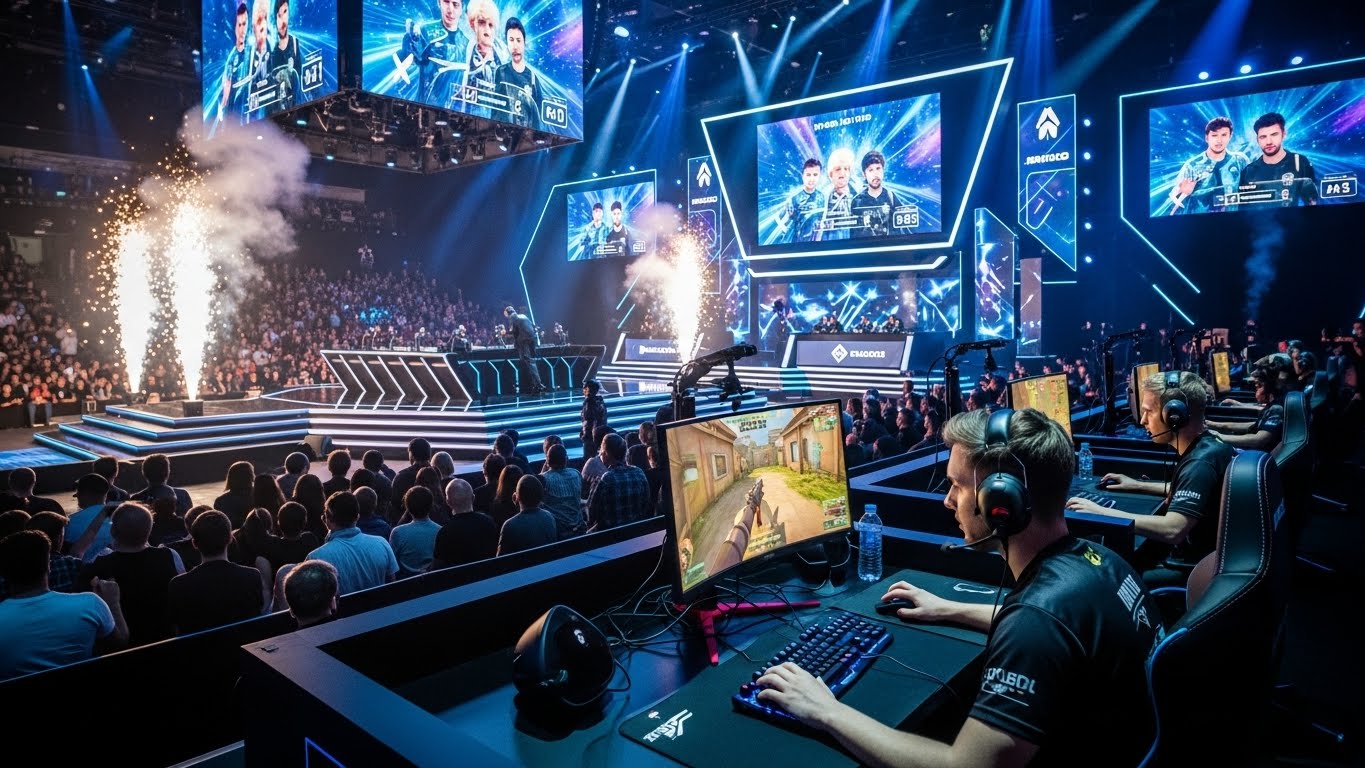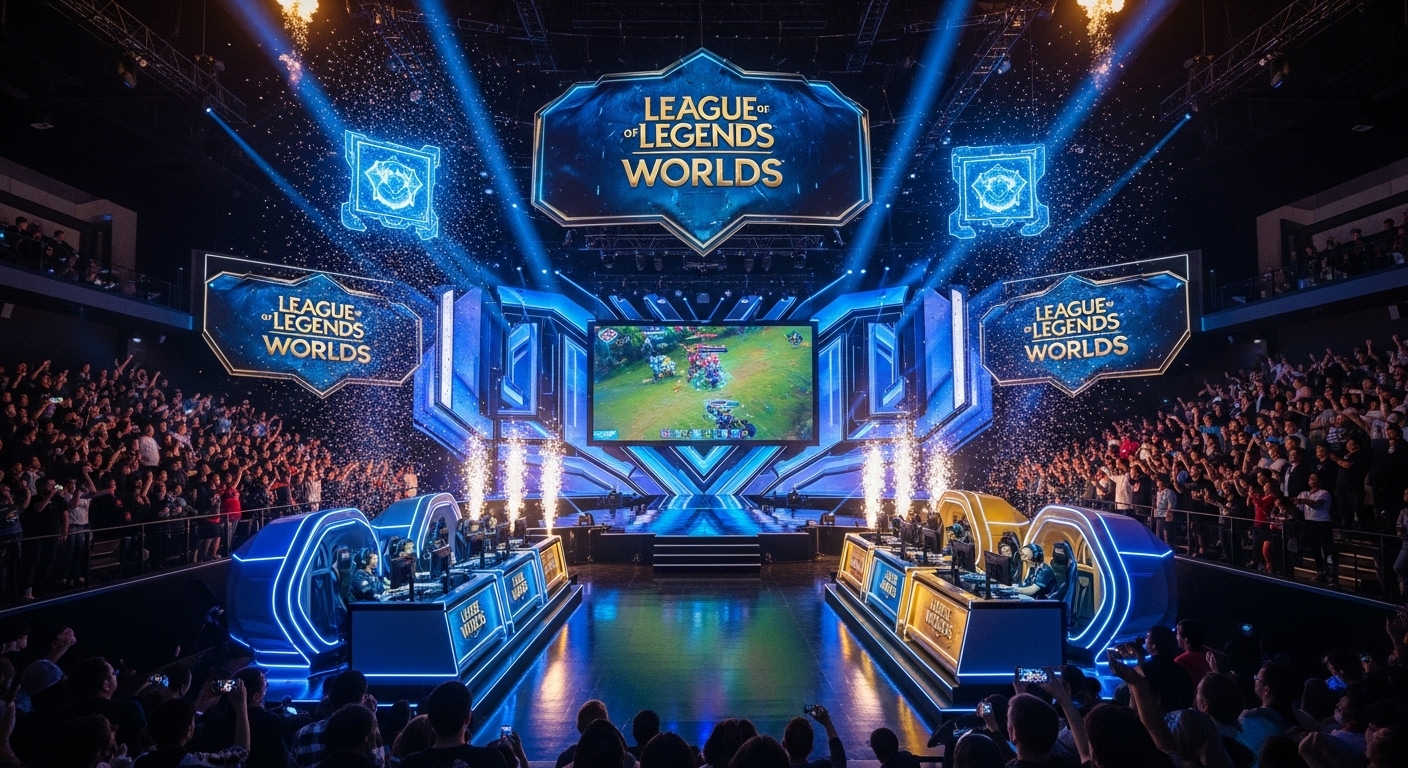
Few events in the gaming and esports world can match the grandeur, scale, and influence of the League of Legends World Championship, more commonly known as Worlds. Since its inception in 2011, Worlds has grown from a modest tournament held alongside gaming expos into one of the biggest annual sporting spectacles in the world, rivaling even traditional sports championships in terms of viewership, production, and cultural reach.
With dazzling opening ceremonies, legendary matches, and global fan engagement, Worlds is much more than a competitive tournament—it’s a festival, a cultural moment, and a defining showcase of esports at its peak. In this blog, we’ll dive deep into why League of Legends Worlds has become a global spectacle, exploring its origins, evolution, cultural impact, unforgettable moments, and why millions tune in every year to watch the very best League of Legends players battle for supremacy.
Origins of Worlds: From Humble Beginnings
When Riot Games launched League of Legends in 2009, few could have predicted that it would evolve into the cornerstone of a billion-dollar esports industry. Back then, esports events were fragmented and relatively niche, with small prize pools and limited mainstream attention.
In 2011, Riot hosted the first League of Legends World Championship at DreamHack Summer in Jönköping, Sweden. Featuring just eight teams and a $100,000 prize pool, it was modest compared to today’s massive scale. Yet, it was revolutionary—it marked Riot’s intention to treat League of Legends not just as a game but as a competitive sport with global ambitions.
That first tournament set the foundation: professional teams, live broadcasting, structured competition, and international rivalry. It was the seed that grew into the modern esports giant we now know as Worlds.
Evolution into a Global Mega-Event
Over the years, Worlds has expanded in scope, scale, and prestige. What started as a side-stage tournament is now a month-long global spectacle involving play-in stages, group stages, knockout rounds, and the grand finals.
Some milestones in its evolution include:
- 2013 (Season 3) – Worlds finals at the Staples Center in Los Angeles sold out in minutes, proving esports could fill arenas traditionally reserved for NBA and NHL games.
- 2014 – The finals were held in Seoul’s World Cup Stadium, drawing 45,000 live attendees and millions of online viewers.
- 2017 – The grand finals in Beijing’s Bird’s Nest Stadium featured an opening ceremony that rivaled the Olympics in production value.
- 2019 – Worlds achieved peak concurrent viewership of over 44 million, cementing it as one of the most-watched sporting events in the world.
- 2022 & 2023 – Riot Games integrated augmented reality, holograms, and musical performances with global artists, blending gaming with mainstream pop culture.
This steady evolution has made Worlds not just a championship but a cultural event that sets the standard for esports worldwide.
The Global Stage: Regional Representation
One of the reasons Worlds resonates globally is its international diversity. Teams from regions across the world compete for a chance to lift the Summoner’s Cup, including:
- LCK (Korea) – The powerhouse region with legendary dominance, producing iconic champions like T1, Samsung Galaxy, and Damwon Gaming.
- LPL (China) – Known for their aggressive playstyle and massive domestic fanbase, with teams like Invictus Gaming, FunPlus Phoenix, and EDward Gaming winning Worlds titles.
- LEC (Europe) – The home of strategic innovation, producing fan-favorite teams like Fnatic and G2 Esports.
- LCS (North America) – While struggling internationally, NA teams like Cloud9 and Team Liquid bring drama, storylines, and passionate fan support.
- Emerging Regions – Teams from Brazil, Turkey, Vietnam, and beyond add unpredictability and new storylines, making Worlds truly global.
The mix of regions ensures clashing playstyles, rivalries, and underdog stories that keep fans hooked every year.
Production Value: Where Esports Meets Entertainment
If one element sets Worlds apart, it’s Riot Games’ commitment to production excellence. Worlds is not just a tournament—it’s a showcase of technology, entertainment, and spectacle.
Opening Ceremonies
Each year, Riot produces breathtaking opening ceremonies that combine music, dance, augmented reality, and storytelling. Some standout moments include:
- 2017 – A giant Elder Dragon hologram flew above Beijing’s Bird’s Nest Stadium, stunning both live and online audiences.
- 2018 – Virtual K-pop group K/DA performed their hit “POP/STARS,” blending AR avatars with live performers.
- 2019 – The “True Damage” performance, combining esports with global music icons, blurred the lines between gaming and mainstream music.
- 2022 – Lil Nas X headlined with an electrifying performance of “STAR WALKIN’,” the Worlds anthem.
Broadcasting & Viewer Experience
Riot also invests heavily in production quality, including:
- Multi-language broadcasts with expert analysis.
- In-depth storytelling about players and teams.
- High-definition replays, advanced graphics, and real-time stats.
- Engaging content like “Worlds songs,” documentaries, and behind-the-scenes features.
This commitment ensures that Worlds feels as professional and engaging as the Super Bowl or the World Cup.
Worlds Anthems: The Soundtrack of Esports
Another unique element of Worlds is its annual anthem—a song produced by Riot and partnered artists that captures the year’s spirit. These songs have become cultural touchstones, motivating players and hyping fans.
Some iconic Worlds anthems include:
- 2014 – Warriors by Imagine Dragons (still considered the most iconic Worlds anthem).
- 2017 – Legends Never Die by Against the Current.
- 2018 – Rise by The Glitch Mob, Mako, and The Word Alive.
- 2022 – STAR WALKIN’ by Lil Nas X.
These songs aren’t just soundtracks—they’re rallying cries, forever linked to unforgettable moments in Worlds history.
The Summoner’s Cup: A Trophy Worth Fighting For
At the heart of Worlds lies the Summoner’s Cup, one of esports’ most prestigious trophies. Weighing nearly 70 pounds and redesigned in 2022 by Tiffany & Co., the Cup represents not only victory but immortality in esports history.
Every pro gamer dreams of lifting this Cup before roaring fans, knowing it cements their place among legends like Faker, Uzi, and Caps.
Iconic Players and Legendary Moments
Worlds has produced countless unforgettable moments that fans still celebrate today:
- Faker (2013–present) – Widely regarded as the greatest player of all time, Faker’s dominance with T1 across multiple eras made him a global esports icon.
- xPeke’s backdoor (2013) – A legendary move where Fnatic’s xPeke single-handedly stole victory, becoming a part of esports folklore.
- Samsung White’s dominance (2014) – A near-perfect run that displayed peak coordination.
- IG’s win (2018) – Invictus Gaming’s victory marked the first Chinese World Champion, igniting LPL dominance.
- DAMWON Gaming (2020) – Ending Korea’s title drought and reasserting LCK’s strength.
These moments resonate far beyond the game—they embody the drama, passion, and unpredictability of elite competition.
Fan Engagement: A Global Community
Worlds is not just about the players—it’s about the fans. Riot has cultivated a global esports community that connects millions across different cultures and languages.
Ways Riot engages fans include:
- In-game Worlds events where players worldwide can unlock skins, watch live games, and earn rewards.
- Fan festivals and watch parties in cities across the world.
- Cosplay and fan art communities that celebrate both esports and League of Legends lore.
- Digital platforms like Twitch, YouTube, and LoL Esports broadcasting free worldwide.
The result is a sense of belonging—fans feel they are part of something bigger than themselves, united by passion for the game.
Cultural Impact: Worlds Beyond Gaming
Worlds has transcended gaming to become a cultural phenomenon.
- Music crossovers with artists like Imagine Dragons, Lil Nas X, and K-pop groups have brought esports into mainstream culture.
- Fashion collaborations with brands like Louis Vuitton (2019) show esports’ influence beyond digital spaces.
- Pop culture recognition – Worlds highlights appear on ESPN, mainstream media, and social media trends worldwide.
- Educational discussions – Analysts and journalists increasingly discuss Worlds in the same breath as the Olympics and FIFA World Cup.
This crossover appeal ensures that Worlds continues to grow beyond the gaming community.
Worlds as a Business: Sponsorship & Economy
Behind the spectacle is a booming business ecosystem. Worlds generates massive revenue through:
- Sponsorships from global brands like Mastercard, Red Bull, Louis Vuitton, and Mercedes-Benz.
- Broadcasting rights across multiple streaming and TV platforms.
- Merchandising and in-game purchases, particularly exclusive Worlds skins.
- Tourism and local economic boosts when finals are hosted in major cities.
This makes Worlds not only a competition but a driving force of the esports economy.
Why Worlds Is a True Global Spectacle
So, why has League of Legends Worlds become such a phenomenon? The answer lies in the unique combination of factors:
- Global participation – Teams from every continent, creating international rivalries.
- Elite competition – The best players battling for the most prestigious title.
- Unmatched production value – Blending sports, entertainment, and technology.
- Cultural integration – From music to fashion, Worlds bridges gaming and mainstream culture.
- Massive community – Millions of fans connecting online and offline, year after year.
This mixture ensures that Worlds is not just a tournament—it’s a celebration of esports, gaming culture, and global unity.
Looking Ahead: The Future of Worlds
As esports continues to grow, so too will Worlds. Some possibilities for the future include:
- Even more immersive technology – VR and AR could make watching Worlds as interactive as playing the game itself.
- Bigger stadiums – Expect future finals in world-famous arenas like Wembley or Madison Square Garden.
- Greater mainstream recognition – With younger generations growing up with gaming, Worlds may one day rival the Super Bowl in cultural impact.
- Expanded regional representation – As regions like Africa and the Middle East develop esports infrastructure, expect more diversity on the Worlds stage.
The future is bright, and Riot’s commitment to pushing boundaries suggests Worlds will only continue to grow.
Final Thoughts
The League of Legends World Championship is far more than a video game tournament—it’s a global spectacle that represents the best of esports. From its humble beginnings in Sweden to filling stadiums and captivating millions worldwide, Worlds showcases how gaming can unite people across borders, cultures, and languages.
Every October, fans know they are about to witness something extraordinary: players chasing glory, unforgettable stories unfolding, and a production that rivals the biggest entertainment events in the world.