Introduction: A Tournament That Changed Esports Forever
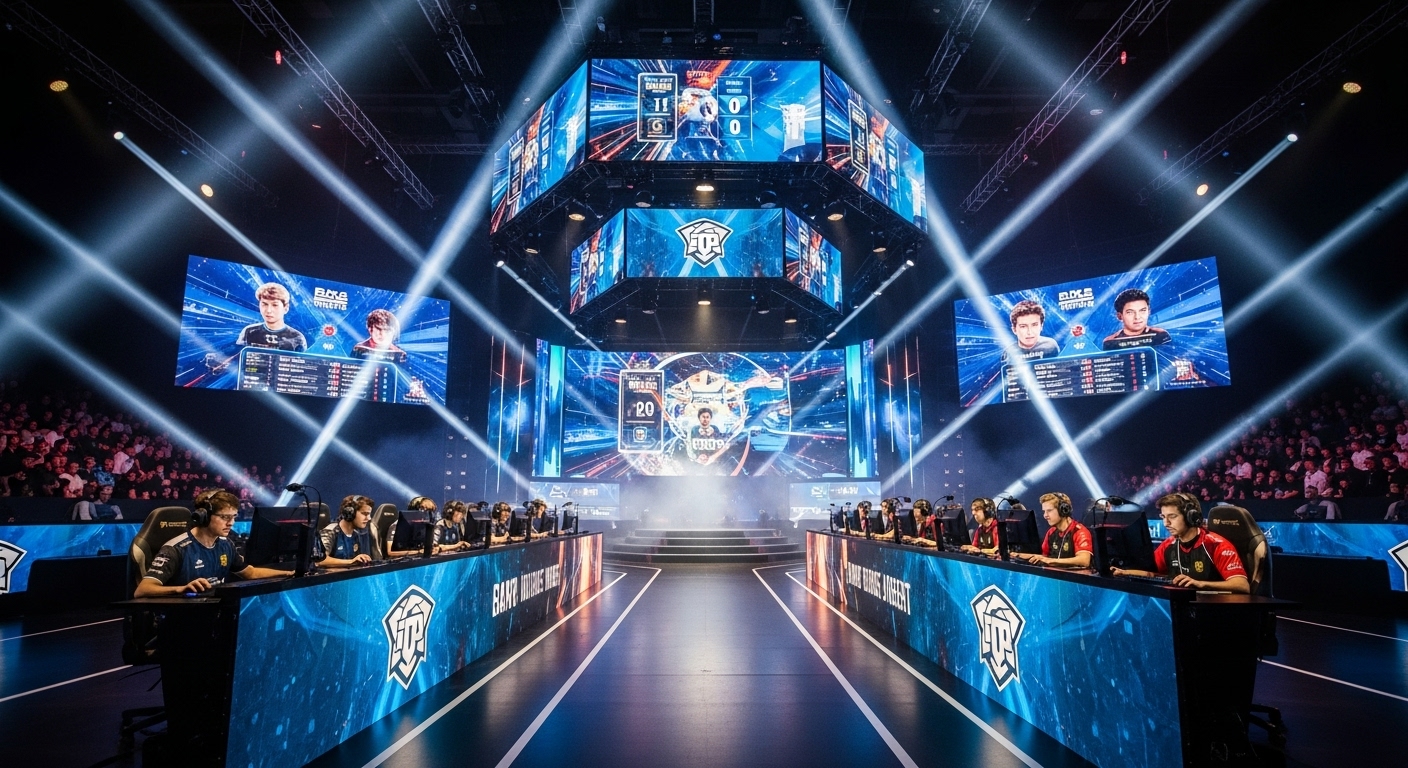
In the history of competitive gaming, few events have had the same cultural, financial, and emotional impact as The International (TI), the annual world championship for Dota 2, organized by Valve. Since its inception in 2011, TI has been more than just a gaming tournament—it has been a symbol of esports’ rapid growth, technological innovation, and community-driven evolution. With record-breaking prize pools, legendary storylines, and dramatic gameplay, TI has consistently stood at the forefront of esports, redefining how fans, players, and organizations view competitive gaming.
But how did The International evolve from a bold experiment in Cologne, Germany, into a global spectacle watched by millions across the world? Let’s dive deep into the tournament’s journey, tracing its development across each year, the changes it introduced, and the legacy it continues to build.
The Birth of The International (2011)
The very first International took place during Gamescom 2011 in Cologne, Germany. Valve shocked the gaming world by announcing an unprecedented $1.6 million prize pool, with $1 million going to the winning team—Na’Vi, led by the legendary Danil “Dendi” Ishutin.
At that time, esports tournaments rarely crossed six-figure prize pools. Valve’s gamble was twofold:
- Introduce Dota 2 to the world (which was still in beta).
- Establish a tournament that would instantly grab attention through its sheer financial scale.
Na’Vi’s dominant run, flashy plays like Dendi’s iconic Pudge hooks, and the drama of East vs. West rivalries gave TI1 a mythical aura. More importantly, Valve had successfully created a new competitive standard—the idea that esports could offer million-dollar stakes.
Building Momentum (2012–2013)
- TI2 (Seattle, 2012): Hosted at Benaroya Hall in Seattle, TI2 refined the production value. Valve introduced better commentary, in-depth analysis, and player features, helping audiences connect with teams. Invictus Gaming (iG) stunned Na’Vi in the grand finals with a crushing 3-1 victory, showcasing the dominance of the Chinese scene.
- TI3 (Seattle, 2013): Widely regarded as one of the most legendary esports tournaments ever. The grand final between Alliance and Na’Vi remains a defining moment, with game five’s “million-dollar Dream Coil” by s4 etched into esports history. TI3 also introduced the Compendium, a digital booklet that allowed fans to contribute to the prize pool through in-game purchases. This innovation changed esports funding forever, with fans directly fueling prize money growth.
By 2013, TI was no longer just a tournament—it was a global esports phenomenon.
The Rise of Community Power (2014–2015)
- TI4 (Seattle, 2014): With the Compendium system in full swing, the prize pool ballooned to $10.9 million, smashing all esports records at the time. Newbee, a Chinese team, took home $5 million. The scale of TI now rivaled traditional sports in terms of stakes, and mainstream media began taking notice.
- TI5 (Seattle, 2015): Prize money reached a jaw-dropping $18 million, once again breaking records. Evil Geniuses (EG) became the first North American team to win, led by the prodigious teenager SumaiL, whose Storm Spirit plays became legendary. His story—a 16-year-old Pakistani player rising to esports superstardom—symbolized the global accessibility of competitive gaming.
At this stage, TI had transformed into a fan-powered spectacle, with prize pools growing year after year thanks to community purchases.
The Golden Era of Unpredictability (2016–2018)
- TI6 (Seattle, 2016): Wings Gaming, an underdog Chinese team, stunned the world with their creative strategies and fearless drafting, defeating Digital Chaos in the finals. Their win epitomized the unpredictable beauty of Dota 2—where innovation could overcome experience.
- TI7 (Seattle, 2017): Another milestone year. Team Liquid completed the first-ever lower-bracket run, defeating Newbee 3-0 in the finals. Miracle-, KuroKy, and GH delivered unforgettable performances. The prize pool hit $24.7 million, the largest in esports history at the time.
- TI8 (Vancouver, 2018): For the first time, TI moved outside the U.S., taking place in Vancouver, Canada. OG’s story shocked the world—they entered as underdogs after roster instability but went on to win against PSG.LGD in one of the greatest finals ever played. The “Cinderella run” of OG was filled with iconic moments, like ana’s Ember Spirit and Topson’s fearless plays. This was Dota at its most magical.
By this point, The International had established itself not only as a tournament of skill but also of mythic storylines.
The Era of Dynasties (2019–2021)
- TI9 (Shanghai, 2019): Valve brought TI to China, recognizing the country’s massive Dota 2 fanbase. The prize pool soared to $34.3 million, breaking its own record again. OG defended their title, becoming the first two-time (and back-to-back) TI champion. Ceb, N0tail, ana, and Topson became legends. This cemented OG’s place as one of the greatest esports teams in history.
- TI10 (Bucharest, 2021): Originally scheduled for 2020, TI10 was delayed due to the COVID-19 pandemic. When it finally happened, it featured a record-breaking $40 million prize pool—the highest in esports history. Team Spirit, a young CIS squad, shocked the world by defeating PSG.LGD, echoing OG’s underdog run. Yatoro’s carry performances and TORONTOTOKYO’s bold confidence made Team Spirit instant heroes.
This period highlighted dynasties and upsets, proving that TI was a place where legends are made and myths are broken.
The New Era of Adaptation (2022–2023)
- TI11 (Singapore, 2022): The first-ever TI held in Southeast Asia. Valve changed the format, splitting the tournament into two phases: “The Playoffs” and “The Finals.” Tundra Esports, a European squad, dominated with surgical precision, defeating Team Secret 3-0 in the finals. Their strategic gameplay marked a shift toward disciplined, calculated Dota.
- TI12 (Seattle, 2023): The tournament returned to Seattle after five years. This time, the prize pool was smaller (around $3 million), as Valve phased out the Compendium funding model. However, the shift placed greater emphasis on competitive integrity and sustainability rather than headline-grabbing prize figures. Team Spirit reclaimed the Aegis, becoming two-time champions, further solidifying the CIS region’s dominance.
This new era emphasized stability, accessibility, and competitive balance, moving away from a pure focus on prize pool records.
Key Innovations of The International
Throughout its evolution, TI has introduced innovations that have shaped esports:
- Massive Prize Pools: By leveraging community funding, TI set financial records that redefined what was possible in esports.
- The Compendium & Battle Pass: These tools revolutionized how fans interact with tournaments, making them stakeholders in the event’s success.
- Production Value: Valve consistently raised the bar with high-quality broadcasts, in-depth analysis, augmented reality features, and cinematic player profiles.
- Global Hosting: From Germany to Seattle, Vancouver, Shanghai, Singapore, and beyond, TI has truly become a global event.
- Narratives & Legends: TI consistently delivers unforgettable storylines—Na’Vi’s dominance, Alliance’s Dream Coil, OG’s miracle run, Team Spirit’s rise—that resonate with fans far beyond the games themselves.
Cultural Impact of The International
The International has transcended esports in several ways:
- Mainstream Recognition: TI’s staggering prize pools drew attention from outlets like ESPN, Forbes, and BBC, legitimizing esports as a serious industry.
- Global Inspiration: Players like SumaiL (Pakistan), ana (Australia), and Ame (China) became role models for aspiring gamers worldwide.
- Community Spirit: The ability of fans to contribute directly to prize pools fostered a unique sense of belonging and investment in the event.
- Esports Tourism: Cities hosting TI benefit from thousands of fans traveling to attend live, much like the Olympics or FIFA World Cup.
Challenges and Shifts
Despite its success, TI has faced challenges:
- Sustainability of Prize Pools: The record-breaking model may not be sustainable long-term, as seen with smaller pools in recent years.
- Accessibility for New Fans: Dota 2’s complexity makes it harder for newcomers to fully appreciate TI compared to more straightforward esports.
- Regional Imbalances: Some regions (like Southeast Asia and South America) have struggled to consistently perform at the highest level, though underdog stories continue to emerge.
Valve’s recent focus seems to be on making TI more sustainable and inclusive, rather than just the biggest financially.
The Future of The International
Where does TI go from here? Several trends suggest its future path:
- Balanced Prize Pools: Instead of chasing records, Valve may focus on healthy funding that prioritizes competitive balance.
- Global Expansion: Expect TI to continue rotating across regions, giving fans worldwide a chance to experience it live.
- Technological Integration: With AR, VR, and AI-based broadcasting improvements, TI broadcasts could become even more immersive.
- Sustainability & Grassroots Growth: TI will likely work hand-in-hand with regional leagues to create a stronger year-round competitive ecosystem.
Ultimately, The International is no longer just about breaking prize records—it’s about preserving its legacy as the crown jewel of esports.
Conclusion: A Legacy Beyond Gaming
From its bold beginnings at Gamescom 2011 to its global spectacles in Shanghai, Singapore, and Seattle, The International has defined what esports can be. It has proven that competitive gaming can rival traditional sports in passion, stakes, and storytelling.
Each year, new legends rise, old champions fall, and unforgettable narratives unfold—all under the shadow of the Aegis of Champions, the most coveted trophy in esports.