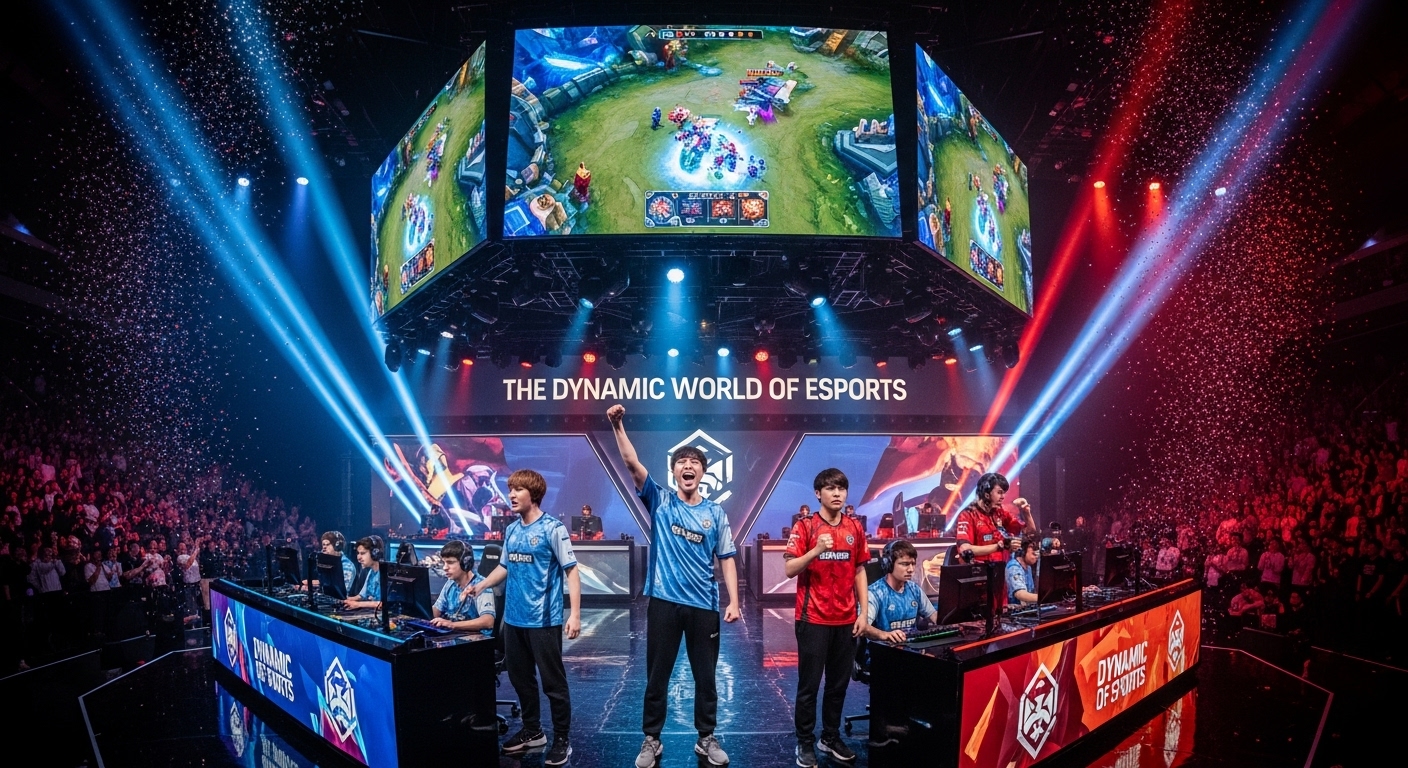
Esports, short for electronic sports, has evolved from a niche hobby to a global phenomenon over the past two decades. The journey from basement tournaments to packed stadiums, millions in prize money, and dedicated followers worldwide is a testament to the power of video games as not just entertainment, but as a serious sport. This blog post explores the rise of esports, its impact on the gaming industry, and the future of competitive gaming.
What is Esports?
Esports refers to competitive video gaming, where players or teams compete against each other in various games, often with professional coaching, sponsorships, and live streaming platforms. Unlike traditional video gaming, which is typically for personal entertainment, esports involves organized tournaments and leagues, similar to those seen in traditional sports like football or basketball.
The games played in esports span a wide range of genres including real-time strategy (RTS), first-person shooters (FPS), multiplayer online battle arenas (MOBA), and battle royale games. Popular titles in esports include League of Legends, Dota 2, Counter-Strike: Global Offensive, Fortnite, Overwatch, and Call of Duty.
The Early Days: From LAN Parties to Global Tournaments
Esports traces its roots back to the late 1990s and early 2000s. In those early days, gaming was mostly a casual activity played at home or in local area network (LAN) parties, where gamers would gather to compete in multiplayer matches. These local tournaments began to grow in size and importance, and the first significant esports competition, the Red Annihilation Tournament, was held in 1997 for the game Quake.
In the years that followed, many games started to include multiplayer features, which allowed players to compete on a global scale. In the 2000s, StarCraft and Warcraft III were among the first games to establish competitive communities, particularly in South Korea, where esports became a national pastime. The rise of broadband internet made it easier for players to compete across countries and continents, setting the stage for global esports tournaments.
The Growth of Esports: Professionalization and Global Recognition
Esports’ growth really exploded in the 2010s. The development of professional esports organizations, sponsorships, streaming platforms like Twitch, and multi-million dollar prize pools turned competitive gaming into a legitimate career choice for many players.
One of the most important turning points was the creation of League of Legends by Riot Games in 2009. The game quickly became one of the most popular esports titles worldwide, and the League of Legends World Championship became one of the most-watched esports events globally. Riot Games also introduced the League of Legends Championship Series (LCS), providing a platform for professional players and teams to compete in a structured and financially supported league.
The rise of Twitch in 2011 also played a key role in popularizing esports. The streaming platform allowed fans to watch professional gamers in real-time, interact with their favorite players, and share in the excitement of high-stakes competitions. In 2014, Amazon acquired Twitch for nearly $1 billion, signaling the increasing importance of live-streaming in the esports industry.
Esports also caught the attention of major sponsors and traditional sports organizations. Big companies such as Coca-Cola, Intel, and Red Bull began investing in esports, sponsoring tournaments and players. Additionally, traditional sports teams like the New England Patriots and Manchester City established esports divisions, further legitimizing competitive gaming.
The Esports Ecosystem: A Multi-Faceted Industry
Esports today is a complex, multi-layered ecosystem consisting of several key elements: professional teams, tournaments, streaming platforms, game developers, and sponsors.
1. Professional Teams and Players
At the heart of esports are the professional players and teams who compete at the highest levels. Many of these teams are sponsored by major organizations, and some players earn significant salaries, sponsorship deals, and prize money. Teams like Cloud9, Fnatic, T1, and Team Liquid have become household names in the esports world.
Professional players dedicate years of training and practice to hone their skills, much like traditional athletes. Esports athletes often undergo intense training regimens, have coaches and analysts, and sometimes even psychologists to improve their mental game. This level of commitment has led to increased recognition of esports as a legitimate sport, with some top players earning millions of dollars annually.
2. Tournaments and Leagues
Tournaments and leagues are the backbone of the esports industry. These events are often broadcasted live, both in-person at packed arenas and online via streaming platforms. Some of the most prestigious tournaments include The International (Dota 2), League of Legends World Championship, CS:GO Major Championships, and Fortnite World Cup. These tournaments attract millions of viewers worldwide and feature prize pools that can reach tens of millions of dollars.
In addition to individual tournaments, there are also professional leagues for games like League of Legends (LCS), Call of Duty (CDL), and Overwatch (OWL). These leagues operate on a season-based format, with teams playing against each other for ranking, championship titles, and substantial cash prizes.
3. Game Developers
Game developers play a crucial role in shaping the esports landscape. Games like League of Legends, Dota 2, and Counter-Strike were designed with competitive gaming in mind. Developers often provide support for esports events by organizing tournaments, implementing spectator-friendly features, and ensuring their games are balanced for competitive play.
Some companies, like Riot Games and Valve, have invested heavily in the esports scene, creating robust infrastructures to support players, teams, and tournament organizers. The developer-publisher relationship with esports organizations is essential to the longevity and success of competitive gaming.
4. Streaming Platforms
Streaming platforms like Twitch, YouTube Gaming, and Facebook Gaming have played an essential role in the growth of esports. These platforms give fans the ability to watch their favorite players and teams compete in real-time, often with live commentary and analysis. Twitch, in particular, has become the go-to platform for gaming content, and its involvement in esports broadcasting has been crucial in turning esports into a mainstream phenomenon.
5. Sponsors and Media Partners
Esports sponsorships have grown exponentially, with companies in industries ranging from technology to consumer goods investing in competitive gaming. Some of the biggest names in esports sponsorship include Intel, Alienware, Red Bull, and Coca-Cola. These brands not only sponsor individual players and teams but also fund major tournaments and leagues.
Television networks and streaming platforms have also started to pick up esports events, further broadening their audience. In 2018, ESPN broadcasted the Dota 2 International, marking the first time that an esports tournament was aired on a major sports network.
The Economic Impact of Esports
Esports is now a billion-dollar industry with enormous economic potential. The total global esports revenue is expected to exceed $1.6 billion in 2025, driven by sponsorships, advertising, media rights, merchandise sales, and ticket sales for live events.
In addition to the direct economic benefits, esports has created a variety of job opportunities, including roles for players, coaches, analysts, broadcasters, event organizers, marketers, and content creators. The rise of esports has led to the creation of colleges and universities offering scholarships and degrees in esports management, game design, and broadcasting, further cementing the industry’s place in the broader economy.
The Future of Esports
As esports continues to grow, its future looks incredibly promising. The increasing interest from traditional sports organizations, the rise of mobile esports, and the integration of virtual reality (VR) and augmented reality (AR) technologies into competitive gaming are all signs of a bright future for the industry.
Mobile esports, in particular, is gaining traction, especially in regions like Asia, where smartphones are the primary platform for gaming. Games like PUBG Mobile and Arena of Valor are drawing massive audiences and are expected to continue growing as mobile gaming becomes more accessible globally.
The possibility of esports becoming an Olympic event has also been a topic of conversation in recent years. Although there are challenges in defining esports as a traditional sport, the growing international interest in competitive gaming could eventually lead to its inclusion in the Olympics.
Conclusion
Esports has come a long way from its humble beginnings, and it shows no signs of slowing down. As the industry continues to evolve, it will attract even more players, fans, and sponsors, shaping the future of gaming and entertainment. For gamers and fans, esports offers an exciting, dynamic world where competition, skill, and strategy come together to create an experience unlike any other.
Whether you’re a die-hard fan of League of Legends or just getting into the world of competitive gaming, one thing is clear: esports is here to stay, and it’s only going to get bigger.